Wild West City: Building Sim
- 4.5
- Rating
- 100.00K
- Installs
- Free
- Price

 Analysis by App-foxy
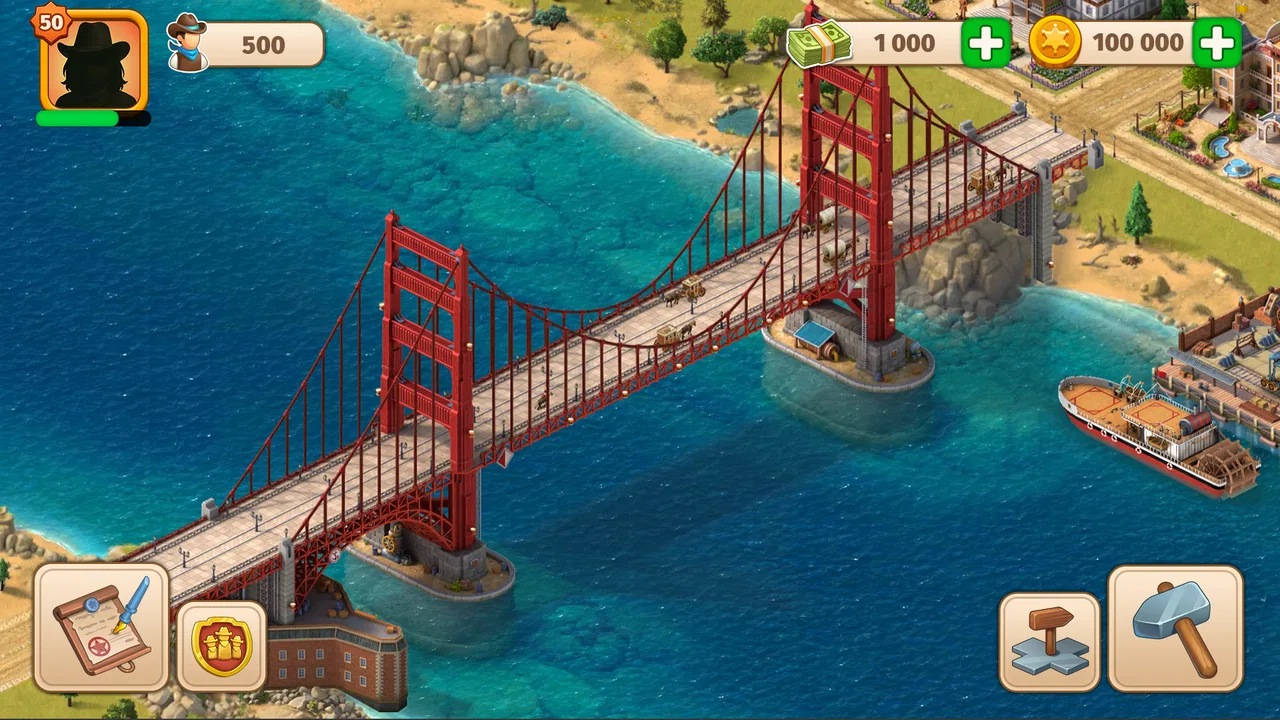
Building a frontier town sounds simple until every new structure changes the way the settlement works. Wild West City: Building Sim puts that planning problem at the center of a free simulation game from RED BRIX COMPUTER SYSTEMS. I spent my time treating the town less like a collection of buildings and more like a small living project: expand carefully, decide what deserves space, and avoid making the next step harder than it needs to be.
The game’s strongest verified idea is its focus on building and managing a pocket-sized Wild West settlement. That gives it a different feel from a purely decorative town builder. I am not only placing attractive structures; I am constantly thinking about growth, order, and whether the town still feels manageable after expansion. For players who enjoy watching a settlement develop gradually, that central capability is the reason to try it.
Why town planning matters more than simple decoration
Many simulation games make construction feel like a checklist. You unlock something, place it, collect the result, and move on. Here, the frontier setting makes the act of arranging a town feel more important. A main road, a cluster of buildings, and open space can make the settlement feel intentional, while careless expansion quickly makes it feel crowded and difficult to read.
You May Also Like

 AccuWeather: Weather Radar
AccuWeather Review: A Quick, Clear Forecast for Everyday Decisions
For everyday plans, the best forecast is the one you can understand quickly. AccuWeather makes rain timing, radar, and local conditions easy to act on, with a few trade-offs.

 Hill Climb Racing
Why Hill Climb Racing Still Turns Crashes Into One More Run
A tiny car, a bumpy hill and one more upgrade: Hill Climb Racing keeps resurfacing because its simple chaos makes every near-miss feel personal.

 AliExpress - Shopping App
AliExpress Makes Global Shopping Feel Personal, but Shoppers Bear the Risk
AliExpress turns a global marketplace into a pocket-sized discovery engine. Its reach is useful, its shopping loop compelling, and its trade-offs easy to miss.

 Lords Mobile: Kingdom Wars
Lords Mobile Is a Kingdom-Building Routine, Not a Quick Match
A case-by-case verdict on the building, battles, device demands, and social commitments that make Lords Mobile rewarding for some players and exhausting for others.

 PDF Scanner app - TapScanner
TapScanner Makes Paperwork Easier to Capture, Check, and Share
TapScanner makes scanning with a phone feel less like a rescue operation and more like a dependable step in getting work done. Its capture tools are useful, though not flawless.

 Block Blast!
 Shows How Much a Puzzle Game Can Leave Out
A quiet grid game shows why puzzle players increasingly value instant clarity, repeatable skill and low-pressure play—and where the genre still needs to catch up.
More From Our News Desk
View All News


I like that the Wild West theme gives the building process a clear personality. The setting is more memorable than a generic modern city, and it encourages me to think in terms of a growing frontier community rather than an abstract grid. That does not turn the game into a complex urban-planning simulator, but it does give ordinary construction decisions more character.
The official store summary presents it as a builder-tycoon experience, and that description is useful because it highlights the tension between creation and management. You are building a town, but the satisfaction comes from making each stage of growth feel earned and controlled. The best moments are not necessarily the largest expansion; they are the points where the settlement starts to look like a place with a purpose.
At the time of writing, the game carries a 4.5 average from around twelve thousand ratings, with more than one hundred thousand installs. Those figures suggest that the approachable frontier-building idea has found an audience, but they do not remove the need to consider how you personally like to play. If you want deep economic modeling or a highly detailed historical simulation, this is unlikely to replace a more demanding alternative.
How I approach a new settlement
My first useful habit is to resist filling every available space immediately. A new town looks empty at the beginning, and the temptation is to place whatever becomes available as soon as possible. I found the experience more comfortable when I left room for the settlement to breathe and treated early construction as a foundation rather than a final layout.
This is one of the game’s less obvious lessons: empty space is a planning tool. It gives later construction somewhere to go and makes the town easier to understand at a glance. Even when the game does not punish a messy arrangement directly, a tidy layout reduces the mental effort of managing the settlement. That matters during short sessions, when I want to make a few decisions without having to rediscover the whole town.
I also recommend grouping related construction instead of expanding in every direction. A compact core makes the frontier town feel established, while a controlled outer edge gives future growth a clear direction. This approach is especially helpful for players using a smaller phone, where constant zooming or scanning can make a scattered settlement tiring to manage.
The practical effect of the building capability is therefore broader than placing structures. It changes how I spend attention. I am looking ahead, preserving flexibility, and deciding whether immediate progress is worth making the next stage less convenient. That is the kind of light strategic thinking that keeps this simulation from feeling like a purely passive decoration app.
A realistic short-session routine
Imagine opening the game during a lunch break with only a few minutes available. I would first look over the town rather than immediately building. I would identify the most useful next improvement, check whether the current layout leaves room around it, and then make one deliberate change. After that, I would stop before turning the session into aimless rearranging.
This routine suits the game well because the frontier-town concept works in small steps. A short visit can still feel productive when the goal is clear: improve the central area, extend the settlement in one direction, or prepare space for the next phase. I would not approach it expecting a long, uninterrupted strategy session every time. Its appeal is stronger when I treat it as a gradual project I revisit.
That workflow also reveals a trade-off. Players who enjoy constant action may find the slower planning rhythm underwhelming. The game’s pleasure comes from seeing a town take shape, not from rapid combat, reflex challenges, or dramatic moment-to-moment surprises. I would recommend it to someone who likes making a sequence of small decisions and then observing the result.
Where the builder-tycoon idea works best
The best scenario for me is a relaxed evening when I want something interactive but not mentally exhausting. I can focus on the visual identity of the settlement, make a few construction choices, and return later with a fresh sense of direction. The Wild West theme helps because it gives the project a stronger mood than a plain construction grid.
It also suits players who enjoy personal organization. If you like arranging spaces in a way that feels logical, you will probably get more from the game than someone who only wants to unlock content as quickly as possible. I found myself judging a successful session by how coherent the town looked and how much flexibility I had preserved, not just by how many buildings I had added.
Families may appreciate the Everyone content rating and the straightforward premise. That does not mean every child will enjoy the management side, but the basic concept is easy to understand: build a frontier town and help it grow. For younger players, the game can encourage simple planning habits, although adults should still remember that the free download includes optional in-app purchases priced from $1.99 to $119.99 per item.
That purchase range is important when deciding whether to share the game with a child. I would discuss spending expectations before handing over a device, even if the player intends to use the free experience. For adults, the same point is less concerning if purchases are simply ignored, but it is still part of the game’s overall design and should not be overlooked.
The trade-off between freedom and direction
The central strength of a town-building simulation can also become its main weakness. When I am given room to shape a settlement, I enjoy the feeling of ownership. However, that freedom is less satisfying if I am looking for a tightly guided campaign with a strong narrative or a clearly defined sequence of objectives. Wild West City: Building Sim is better approached as an ongoing construction project than as a story-led adventure.
Another limitation is the possibility of repetition. Building and managing a town can be calming, but the appeal depends on enjoying gradual improvement. If you need constant novelty, a more event-driven simulation or a faster strategy game may hold your attention better. I would not choose this as my first recommendation for someone who wants competitive play, intense time pressure, or a large cast of characters driving the experience.
The free-to-play structure also requires sensible expectations. The game is free to start, but the presence of optional purchases means that progress and convenience may be designed around a monetized loop. I would play patiently, decide in advance whether I am willing to spend anything, and avoid making a purchase simply because I feel pressured to speed up a routine task.
A useful personal rule is to judge the game by whether the free building process remains enjoyable without spending. If I can still plan, expand, and appreciate the town at my own pace, the model is easier to live with. If I begin thinking more about bypassing friction than about designing the settlement, that is a good point to step away rather than spend automatically.
Small habits that make the town easier to manage
One practical tip is to keep the center of the settlement visually simple. A readable core makes it easier to notice what has changed since the last session and prevents the town from becoming a confusing patchwork. I prefer a recognizable central area with expansion happening around it, because that gives every later decision a reference point.
A second tip is to separate “progress” from “completion.” I do not need to fill the map or make every available improvement immediately for a session to be successful. Sometimes the best move is to leave the town alone after a careful adjustment. That mindset prevents unnecessary construction and keeps the next visit interesting.
A third insight is to use the frontier theme as a design constraint. Instead of trying to make the settlement look like a modern city, I find it more satisfying to preserve a sense of open land and gradual outward growth. This is not merely cosmetic: it gives me a clear answer when I am unsure where to build next. The town should feel like it is developing into the wilderness, not simply occupying every empty patch.
These habits are not complicated systems, but they make a noticeable difference to the experience. The game becomes less about tapping through available options and more about maintaining a settlement that I can understand. That is where its builder-tycoon identity feels most convincing.
How it compares with other simulation choices
Compared with a traditional city simulator, this game feels more approachable and more focused on the charm of a single frontier settlement. A full city-management alternative may offer deeper transportation, zoning, public services, or economic detail. I would choose that kind of game when I want to solve complex infrastructure problems or study the effects of many interconnected systems.
Compared with a farming simulation, the emphasis here is different. A farming game usually draws me toward crops, routines, characters, and personal progression. This title is more appealing when the town itself is the project. If I want to care for a homestead or follow a character-driven daily life, another genre would be a better fit.
It also differs from idle builders that are designed mainly around watching numbers rise. The frontier setting and construction focus give me more reason to think about layout and presentation. Still, anyone who prefers almost entirely hands-off progress may find a pure idle game more convenient. Wild West City: Building Sim works best when I want to participate in the town’s development rather than simply collect from it.
The current version is 1.0.1217, and the game requires Android 6.0 or later. That makes it accessible to people using older compatible Android devices, though the quality of the experience will still depend on the phone’s screen size and performance. I would be especially careful about choosing a compact layout on a small display, since visual clarity becomes more valuable than squeezing in every possible building.
Who should play and who should skip it
I think the game is a good match for patient players who enjoy simulation, light planning, and visible town development. It is particularly suitable if you like returning to the same project over several sessions and making incremental improvements. The Wild West presentation adds enough identity to make the construction feel personal rather than purely mechanical.
I would also recommend it to casual players who want a free game they can sample without committing to a purchase. The Everyone rating makes the premise broadly accessible, while the simple idea of building a frontier community is easy to understand. Just keep the in-app purchase range in mind if the device is shared with children or if you prefer games with no spending prompts at all.
I would skip it if my priority were a detailed economic model, a strong narrative, competitive multiplayer, or immediate action. I would also be cautious if I knew I disliked games that ask for patience or encourage repeated visits to the same settlement. In those cases, a deeper city simulator, a story-based western game, or a faster strategy title would probably offer a better fit.
RED BRIX COMPUTER SYSTEMS has chosen a clear and accessible direction here: let the player grow a small Wild West town and make the arrangement feel like part of the challenge. In my experience, that focus is more valuable than a long list of unrelated features. The game does not need to be everything at once; it works when I give it time to turn modest construction choices into a settlement with a recognizable shape.
My final recommendation is to try it as a calm planning game rather than as a high-pressure tycoon. Keep the early layout flexible, build with a readable center, and decide beforehand how you want to handle optional purchases. If that measured rhythm sounds appealing, Wild West City: Building Sim offers a pleasant way to create a frontier town one thoughtful decision at a time. Its best quality is simple but meaningful: the way you arrange the town becomes the main source of satisfaction.
FAQs for Wild West City: Building Sim
01What is Wild West City: Building Sim?
Wild West City: Building Sim is a western-themed city-building and management game in which you develop a frontier settlement from the ground up. You typically place buildings, collect resources, expand the town, and manage its growth while creating the look of your own Wild West community. It combines construction, light strategy, progression, and decorative customization in a casual format.
02How does the gameplay work in Wild West City: Building Sim?
The main gameplay loop revolves around constructing and upgrading buildings, producing or gathering resources, and completing objectives that help your settlement grow. As your town develops, new structures and improvements become available, allowing you to expand its economy and appearance. The experience is generally easy to learn, although efficient planning is important when managing space, resources, and upgrade requirements.
03Is Wild West City: Building Sim free to download and play?
The game is generally offered as a free download, allowing players to begin building their western town without paying an upfront purchase price. However, free-to-play games may include optional in-app purchases for premium currency, faster progress, special items, or other advantages. Before downloading, check the current store listing for pricing details, advertisements, supported payment options, and any age-related purchase restrictions.
04Can Wild West City: Building Sim be played offline?
Some basic building and management activities may work without a constant internet connection, but offline availability can depend on the version installed and the platform being used. Online access may be required for advertisements, cloud saves, updates, events, purchases, or synchronization. If uninterrupted play is important to you, test the game in airplane mode after installation and avoid assuming every feature will remain available offline.
05Is Wild West City: Building Sim suitable for all players?
Wild West City: Building Sim is mainly aimed at players who enjoy relaxed city-building, resource management, and western settings rather than fast action or complex competitive strategy. Its suitability can still depend on advertisements, optional purchases, device performance, and the amount of time required for upgrades. Parents should review the current content rating and purchase settings before allowing younger players to download it.
Pros
- Relaxed Wild West setting with charming visuals and a clear town-building goal.
- Simple controls make it approachable for casual players of all experience levels.
- Town customization lets you shape the layout and develop your own frontier style.
- A variety of buildings and tasks keeps early progression engaging.
- Offline play can make it convenient for gaming during travel or without Wi-Fi.
Cons
- Progress may slow considerably once construction timers and upgrades become longer.
- Energy or resource limits can interrupt play during longer building sessions.
- The gameplay loop may feel repetitive after completing similar town tasks.
- Some upgrades may encourage spending premium currency to save time.
- Small-screen menus and text can feel cramped on certain phones.

Wild West City: Building Sim
Gallery